
AI in real estate now covers more than chatbots answering FAQs. It qualifies leads by voice, predicts which buyers will convert, generates marketing content, and increasingly takes multi-step actions on its own. This guide covers the difference between AI and AI agents, where AI actually helps developers and brokers, and the real use cases worth adopting first.
AI vs. AI Agents for Real Estate
Plain AI and AI agents solve different problems, and the distinction matters when you’re evaluating a real estate tool. Vendors use the term “AI-powered” loosely, so it helps to know which one you’re actually buying.
| Features | AI | AI Agent |
|---|---|---|
| What it does | Scores, predicts, or generates on request | Carries out a multi-step task on its own |
| Needs a human to | Act on its output | Only approve or intervene when something looks off |
| Real estate example | Scoring which leads are likely to convert | Calling a lead, qualifying it by voice, and updating the CRM without a rep touching it |
| Where it shows up today | Dashboards, reports, lead-scoring widgets | WhatsApp bots, AI voice calling, automated follow-up sequences |
Most CRMs use AI to predict lead intent or assign scores, but sales reps still have to make calls, send messages, and update records manually.
AI agents go a step further. They can respond to WhatsApp inquiries, ask qualifying questions, book site visits, and update the CRM without waiting for a sales rep.
For example, if a buyer enquires about a 2 BHK at 11 p.m., AI can respond immediately, qualify the lead, and book a site visit. This helps real estate teams capture interest even outside working hours.
The key difference is simple: AI predicts what to do, while AI agents can take action.
Benefits of Using AI in Real Estate
- Faster Lead Response: AI voice and WhatsApp flows respond to new inquiries within minutes, including nights and weekends.
- Smarter Lead Prioritization: AI ranks leads based on their likelihood to convert, helping sales reps focus on high-intent buyers first.
- Better Marketing ROI: AI attribution connects ad spend to site visits and bookings, helping developers identify campaigns that generate actual buyers.
- Faster Content Creation: AI generates property descriptions, ad variations, and personalized messages across multiple projects.
- Consistent Lead Nurturing: Automated follow-ups keep inactive leads engaged without relying on sales reps to remember every interaction. Use Cases of Artificial Intelligence in Real Estate
1. Sales Automation
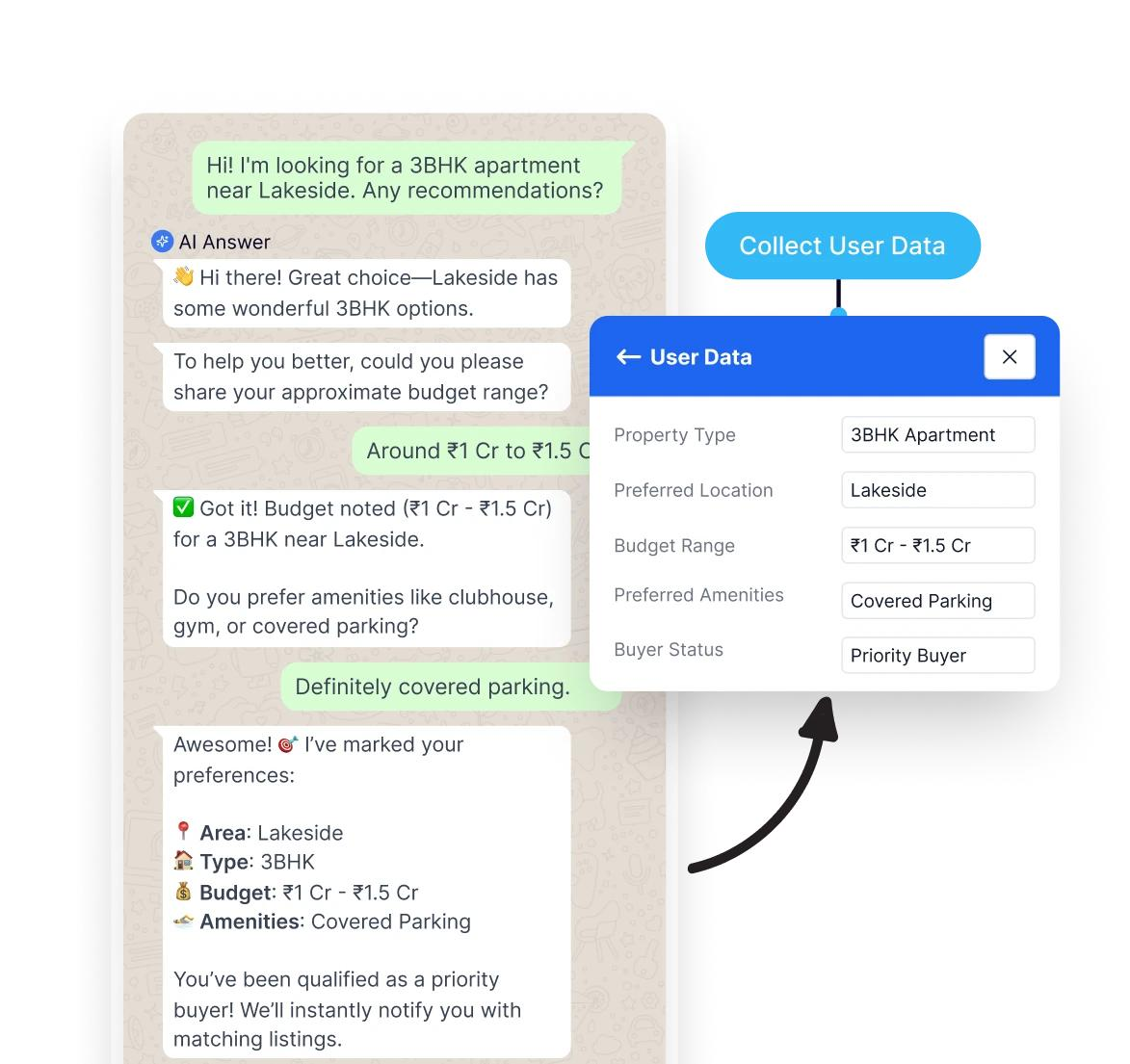
AI sales assistants, including voice calling and WhatsApp bots, handle the first response to a new lead. They ask qualifying questions, check budget and timeline, and book a site visit slot. All of this happens before a human rep gets involved.
Routing rules then send only qualified leads to the right rep, instead of flooding the whole team with unfiltered inquiries. A lead that doesn’t respond within a set window can trigger an automatic follow-up sequence. It doesn’t just sit untouched until someone remembers to check back.
2. AI Analytics in CRM
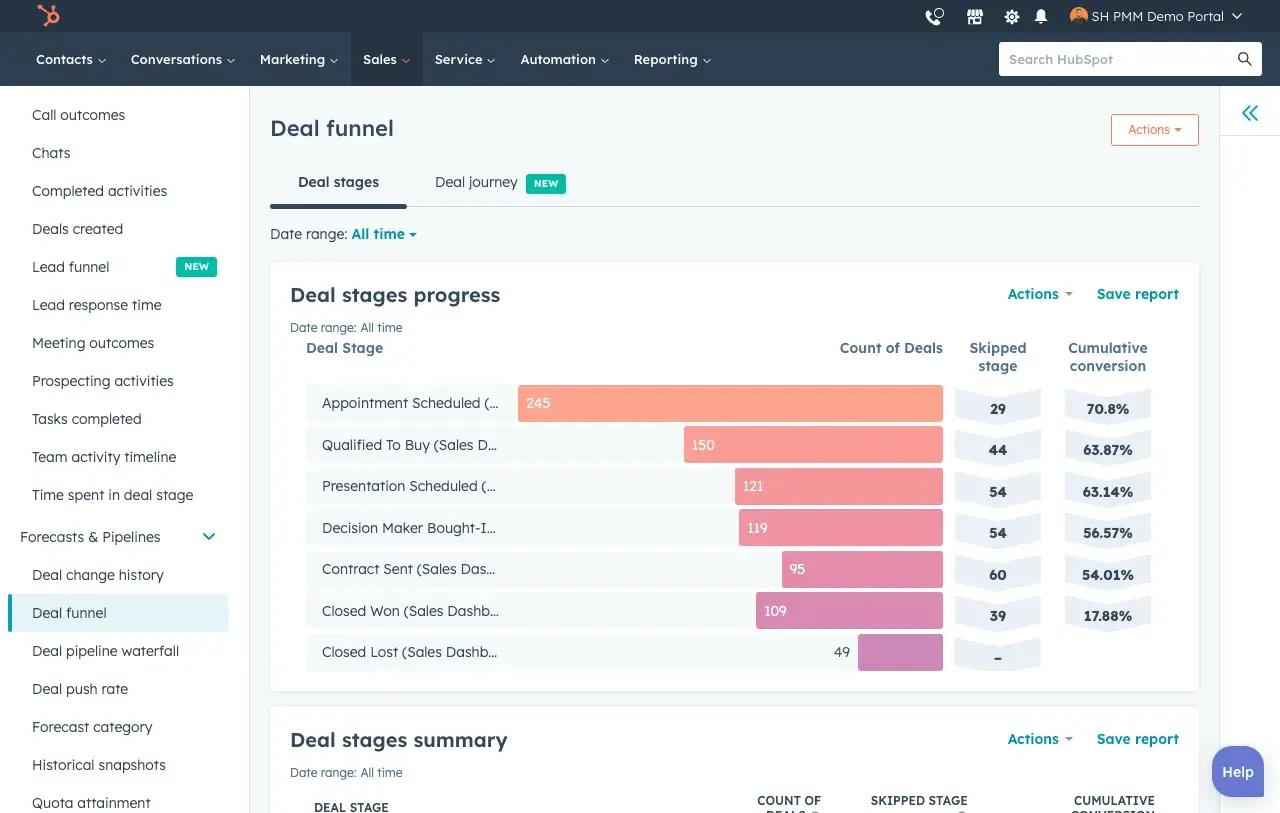
Lead scoring models rank buyers by how likely they are to convert, based on patterns from past bookings. A sales manager gets a ranked pipeline instead of a flat list of names.
Analytics dashboards bring this data together through attribution models that show which channel, campaign, or broker actually produced the sale, not just which one generated the most clicks. Drop-off analytics flag exactly which pipeline stage is losing the most leads, whether that’s after the first call or after the site visit. A manager then knows where to focus coaching, instead of guessing. That kind of visibility also helps spot which lead sources are quietly underperforming, which is easy to miss when leads from five different channels all land in the same inbox.
3. Hyper-personalized Marketing
AI segments buyers by intent signals. An NRI investor might browse at odd hours, a first-time buyer compares EMI calculators, and a repeat customer checks a new tower. Each segment gets different ad creative, messaging, and follow-up timing, instead of one generic campaign aimed at everyone.
That personalization extends to timing as well as content. A campaign aimed at NRI buyers can run in the evening in their local time zone. A local first-time-buyer campaign can run during regular working hours in the project’s own city instead.
4. Content & Creatives Generation
AI generates ad copy variations, property descriptions, and social media captions at a volume no small marketing team could produce manually. It also supports virtual staging and video scripts for walkthroughs, cutting the turnaround time for a new project launch from weeks to days.
The same source material can be adapted into several formats at once. That includes a long property description for a landing page, a short caption for social media, and a script for a short video.
For Indian developers marketing across multiple states, AI can also generate the same creative in several regional languages at once. A campaign running in Mumbai and Pune might need Marathi and Hindi variants alongside English. Translating every ad variation by hand would otherwise eat into the launch timeline.
5. Large Data Analytics
AI processes pricing, demand, and buyer-behavior data across projects and regions to spot patterns a human analyst would take weeks to find. That includes which price points stall sales and which locations are seeing rising search interest.
It can also flag which project features buyers mention most often in inquiries, information that usually gets lost across hundreds of individual conversations. For a developer planning a new launch, that kind of pattern can inform pricing and unit-mix decisions before a single unit goes on sale.
It can also benchmark a project’s pricing against comparable launches in the same micro-market. That flags when a price point sits noticeably above or below similar units selling nearby. It’s a comparison that used to mean manually tracking competitor listings across several portals.
FAQs
How is AI used in real estate?
AI is used for lead qualification, sales automation, predictive analytics, personalized marketing, and property content generation.
How do AI agents differ from traditional AI in real estate?
Traditional AI provides insights or predictions, while AI agents can independently handle tasks such as responding to leads, qualifying buyers, and booking site visits.
Can AI help real estate developers generate more qualified leads?
Yes. AI qualifies inquiries based on buyer budget, preferences, and purchase timeline, helping sales teams focus on high-intent leads.
What is an AI-powered real estate CRM?
An AI-powered real estate CRM uses automation, lead scoring, voice calling, and analytics to manage leads, improve follow-ups, and track sales performance.
Try ACXTotality - Our Proprietary AI-powered Real Estate CRM
Most of the use cases above aren’t theoretical. AbsoluteCX already runs AI voice qualification, lead scoring, and campaign attribution for real estate developers and brokers today.
It helps sales teams respond to inquiries faster, identify high-intent buyers, automate follow-ups, and understand which marketing campaigns bring actual conversions. Instead of spending hours managing leads manually, teams can focus more on buyer interactions and closing deals.
If you’re looking to bring AI into your real estate sales and marketing operations, ACXTotality can help you get started. Book a demo to see how it can support your team’s lead management and sales process.